
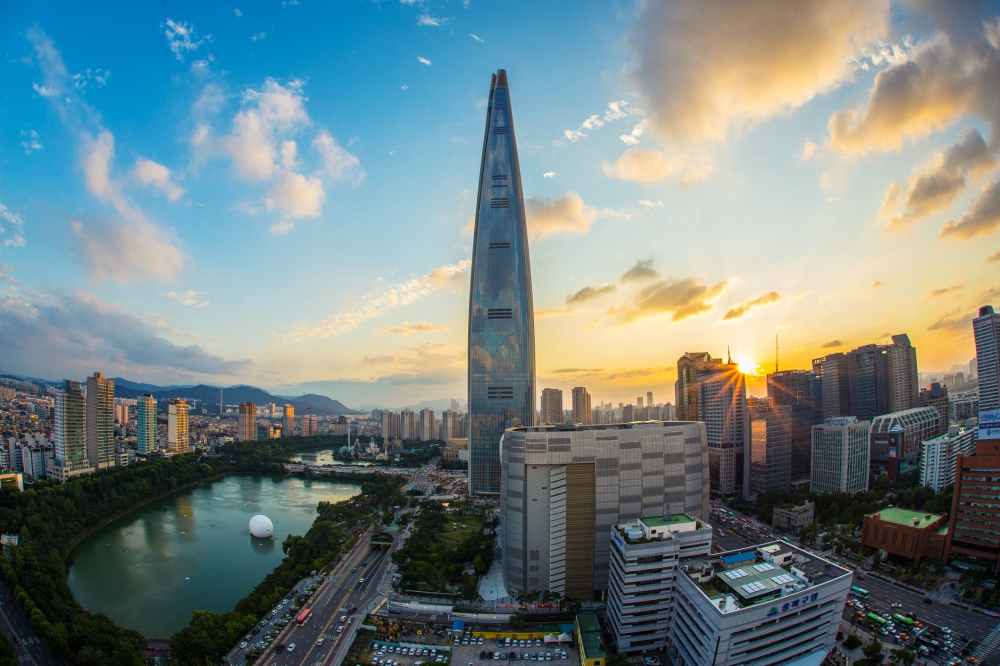
During the late 20th century Seoul, South Korea joined the wave of industrialization in becoming one of the most rapidly urbanizing cities in Asia. The quick development of Seoul after the Korean War was due to the booming economic activity and substantial migration there. Although the development brought the people of South Korea many great social benefits, the speedy rate of population and infrastructure growth created a negative impact on the environment.
Urbanization is a global issue that has a great deal of influence on the ecosystems surrounding it. A city, similar to a forest, is complex adaptive system where emergent properties create positive or negative feedback to maintain their environment. In other words, an ecosystem has diverse components that interact with one another in which one variable cannot be fully explained nor exists without the functioning of others. The technological advancements made by people force elements to adapt in order to sustain productive activity within the reasonable threshold.
The urbanization of cities impacts the area by making it warmer due to the Urban Island Effect, where various components add to the heat like anthropogenic heat emissions and low wind speed. One city in specific that has felt the push of urbanization is Seoul, Korea. The urban island present in addition to global warming created heat waves within the city. The certain change in Seoul’s temperature was recorded through local climate zones.
Temperature is not the only thing is Seoul that has risen; There was a sharp upturn in Korean’s Gross Domestic Product due to the increased industrialization in its metropolitan areas. Industrialization meant more money and more growth as a city, that is until Seoul faced a terrible downfall. European media about the consequences of heavy, gas guzzling machinery spread to South Korea, but the city kept expanding. The rapid industrialization caused building collapses and terrain modification, adding to the flux of carbon being released into the atmosphere resulting in greenhouse gases.
Seoul is now initiating urbanized reconstruction to observe the overbearing effects of technological advancement and recover from it. To take action the Seoul government must take on urban planning which “in a broad sense relies on urban reconstruction to obtain the current state of the urban environment. This form the basis for developing future plans or to judge new plans in the context of the existing environment.” By analyzing the terrain and several aspects of the metropolitan area, Seoul can come up with creative solutions to sustain they’re people and businesses.
There is an array of ways to go about fixing the failing infrastructure and cooling off the surface while maintaining the citizens’ lifestyle. One applicable idea to implement within the city is green spaces. Urban green spaces are essentially areas dedicated to fostering plant life, like parks and preserved ecosystem sites. Plants absorb carbon dioxide and release oxygen, therefore there would be less greenhouse gases present to trap heat. Seoul, South Korea like many other Urban Heat Islands must adapt to mitigate the increasing temperatures.
Work Cited:
https://biodiversity.europa.eu/topics/tipping-points
http://www.eastasiaforum.org/2014/02/28/south-koreas-urban-development-dilemma/
https://pdfs.semanticscholar.org/6818/cb11cf34607d00bb999bff5e911dbf40c946.pdf

 The Underwater City Herald